Full mouth reconstruction and All-on-4 full-arch implant planning on Long Island
If prior dental work has not held up — or another office could not finish a complex full-mouth case — this is where we rebuild under one roof in Woodbury: prosthodontics, periodontics, digital engineering, and our on-site lab.
Patients searching for full mouth reconstruction Long Island often need more than a single crown or whitening visit. At integratedDENTAL in Woodbury, full-mouth and full-arch care is planned with prosthodontics, periodontics, digital scanning, and an on-site dental lab under one roof — including All-on-4 and related implant-supported options when they fit the case. All-on-4 is a commonly searched term and one full-arch implant treatment concept; it is not a universal recommendation for every patient.
All-on-4 is one full-arch implant concept. At integratedDENTAL in Woodbury, Long Island, we plan the final teeth first, then decide whether a fixed full-arch restoration, a removable implant-supported option, or another path fits. Timing and materials depend on a clinical evaluation — not a one-size same-day promise.
What full mouth reconstruction means here
Full mouth reconstruction means rebuilding bite, teeth, and gum/bone support across much or all of the mouth. Depending on the case, that may include crowns, periodontal therapy, dental implants, or a fixed full-arch bridge. Periodontists help with foundation and implant-related surgery; prosthodontists plan bite and the final prosthesis; digital/CAD specialists and our on-site lab design and manufacture with precision. See our periodontist in Woodbury page for gum and implant specialist care.
The planning process focuses on whether a full-arch implant approach makes clinical sense, what restorative design may be appropriate, and what additional evaluation is needed before treatment decisions are made.
Some patients may be candidates for fixed full-arch restorations, while others may be better served by removable implant-supported overdentures or other staged restorative options. The right plan depends on clinical findings, budget, maintenance needs, and long-term function.
Request Consultation or learn about dental implants.
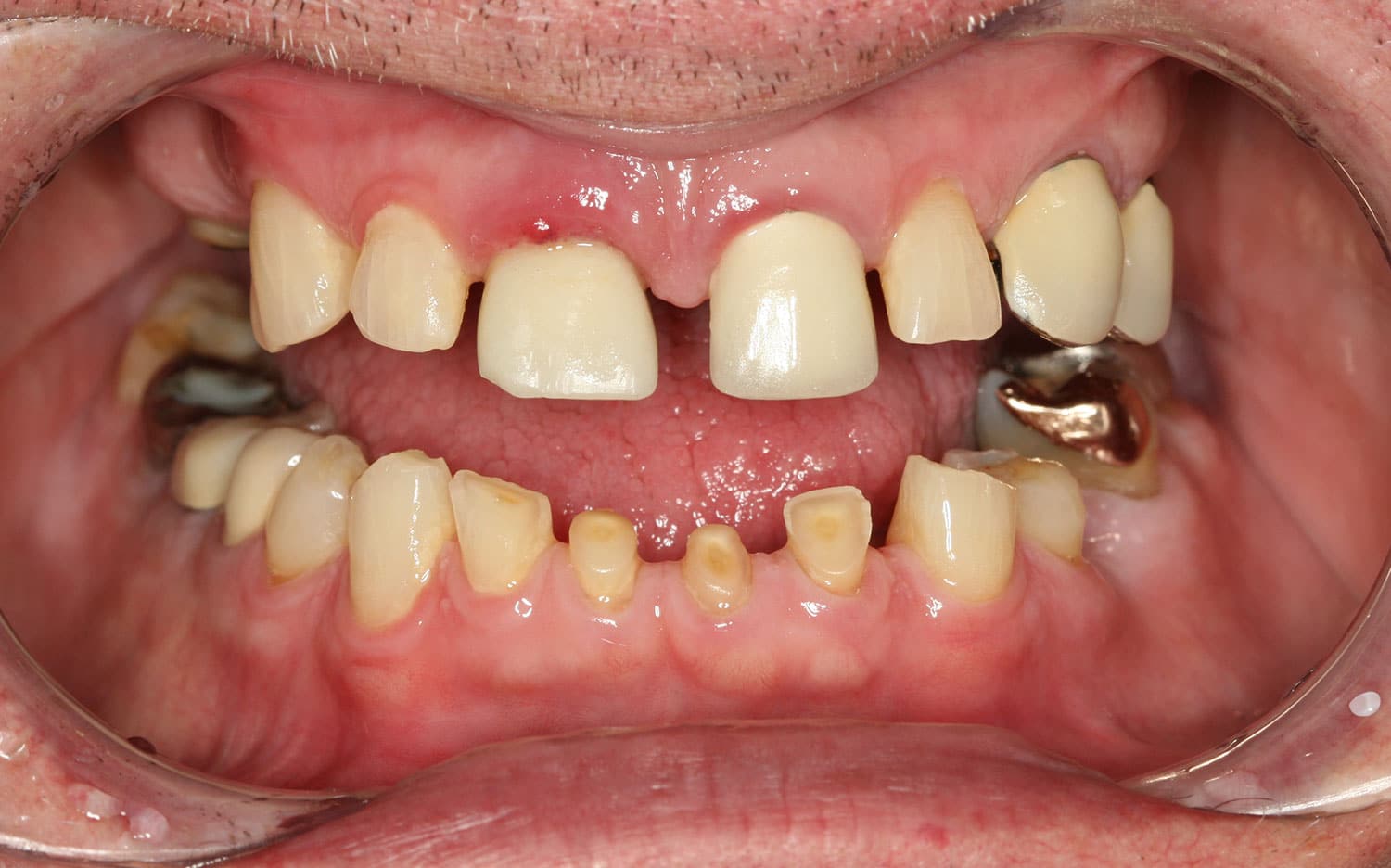
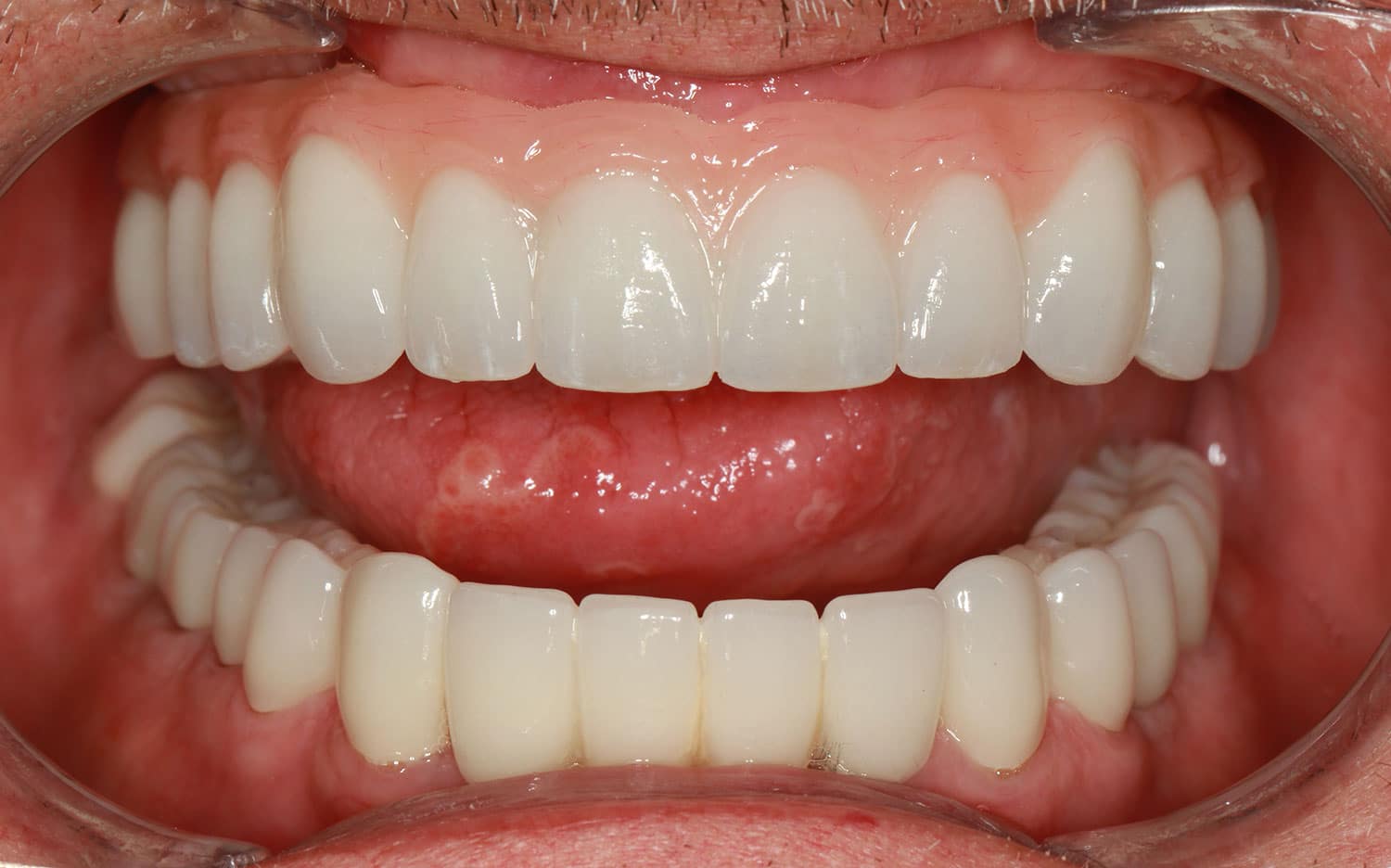
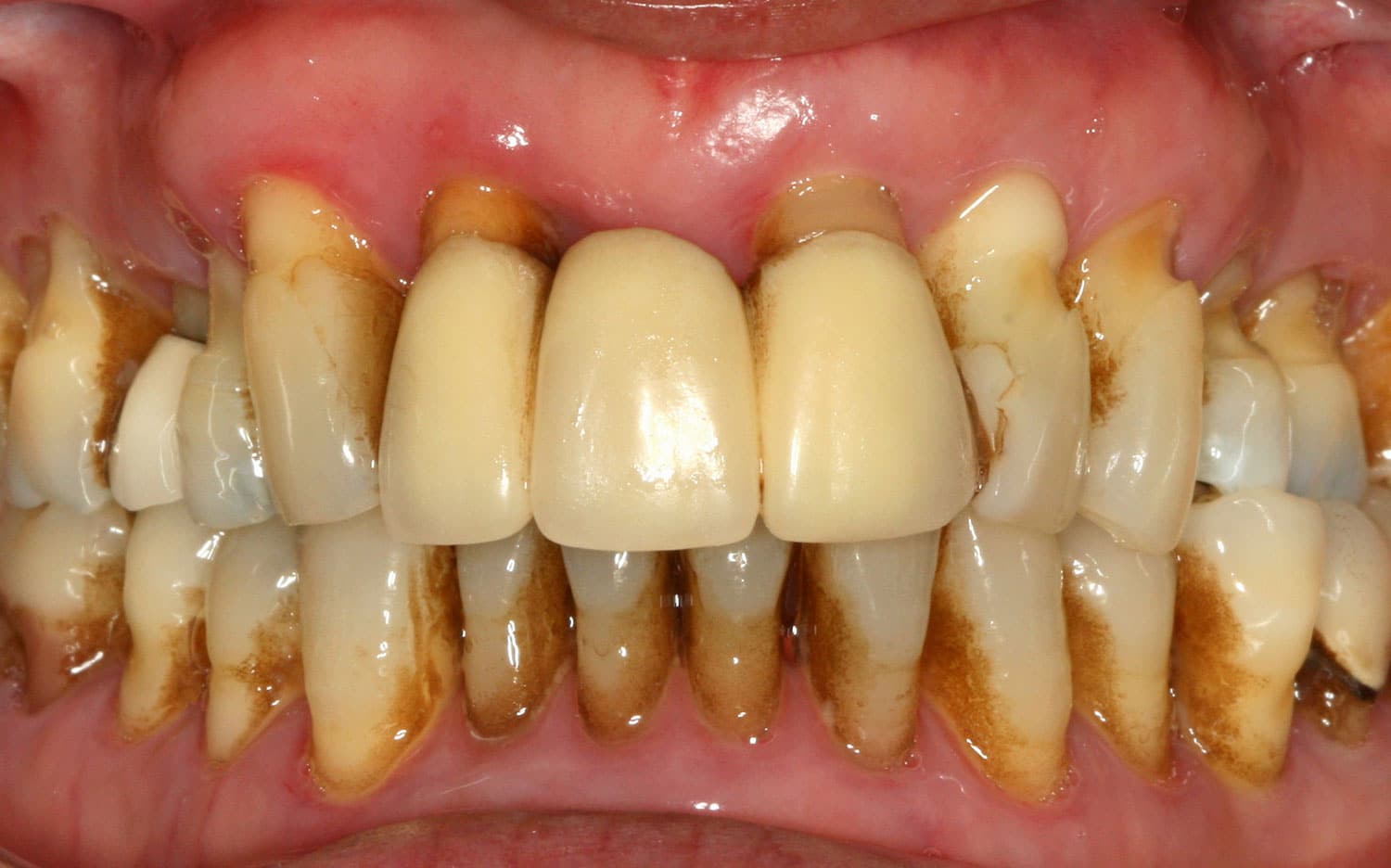
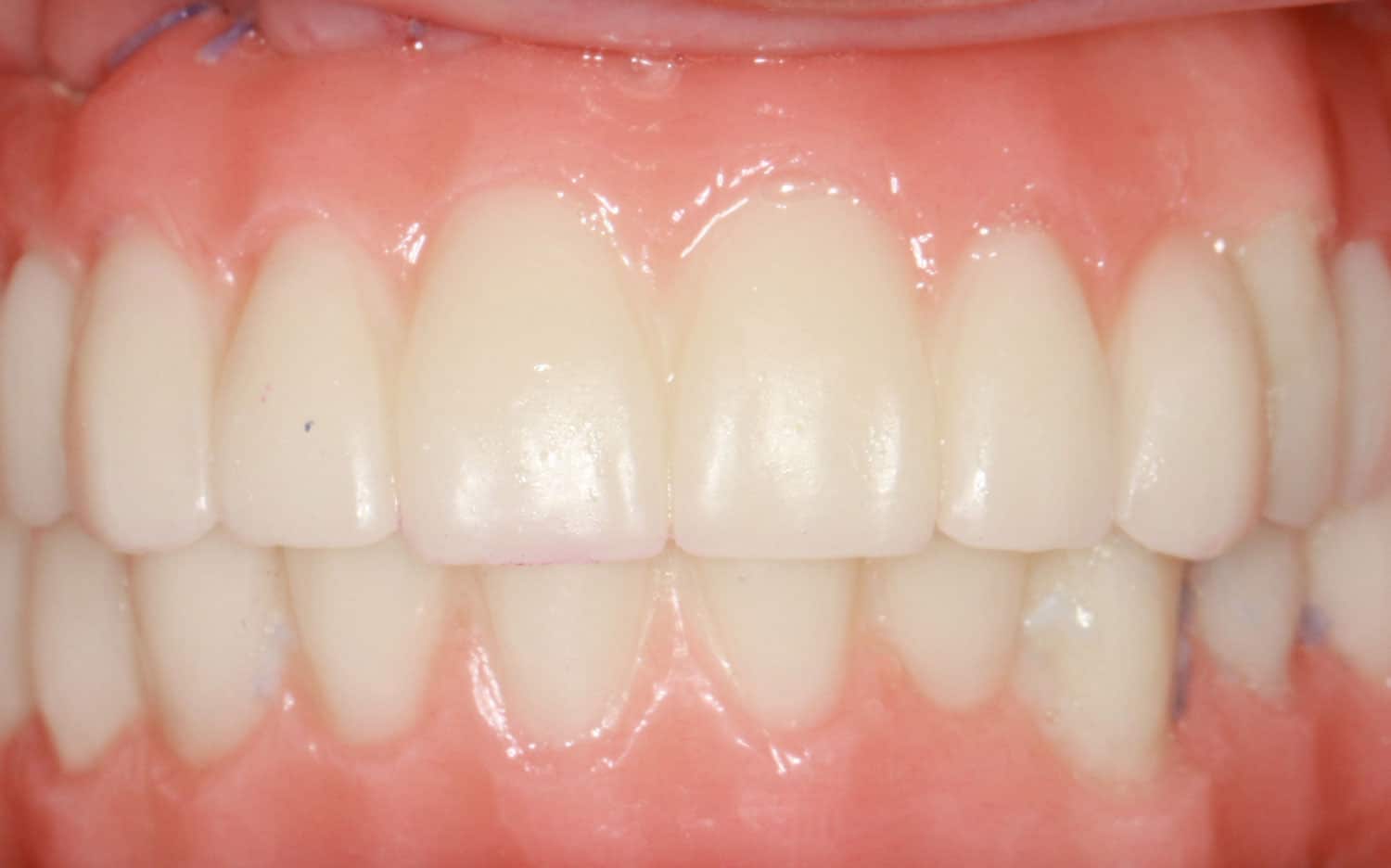
i4S before and after examples
These examples are from existing Integrated Dental i4S / All-on-4 smile-design cases. Individual results vary, and the right full-arch option depends on clinical evaluation, bite, bone support, hygiene access, and long-term maintenance needs.
What patients mean by All-on-4 or full-arch implants
Patients often search for All-on-4 dental implants when they are trying to understand whether a full arch of failing or missing teeth can be replaced with a more stable option than traditional dentures.
All-on-4 is a commonly used term for a full-arch implant treatment concept where a complete upper or lower set of teeth is supported by dental implants. Patients may also hear terms such as full-arch dental implants, implant-supported teeth, fixed implant bridge, hybrid denture, or implant-supported denture.
These terms are often used loosely online. The right treatment depends on clinical findings, bone availability, bite forces, gum health, esthetic goals, and whether the final teeth should be fixed or removable.
Why the final teeth should be planned first
Full-arch implant treatment should be planned around the final result, not only the implants themselves.
The position, shape, color, bite, and cleanability of the final teeth influence the treatment plan. Digital scans, photographs, bite analysis, restorative planning, and periodontal perspective can help guide the discussion before a patient commits to treatment.
This planning-first approach is especially important for patients who have:
- Failing teeth
- Loose or uncomfortable dentures
- Advanced wear or bite collapse
- Missing teeth across one or both arches
- Prior dental work that no longer functions well
- Concerns about smile appearance, speech, or chewing
Full-arch implant planning starts with the final teeth
Full-arch implant treatment is not only an implant decision. The final teeth, bite, gum health, bone support, speech, smile design, and maintenance plan all need to work together.
At integratedDENTAL in Woodbury, Long Island, full-arch conversations begin with coordinated planning. That may include digital scans, photographs, bite analysis, periodontal evaluation, restorative space review, and a discussion of whether a fixed full-arch restoration, removable implant-supported option, staged care, or another treatment path may fit the patient’s needs.
All-on-4 is a commonly searched term and one full-arch implant treatment concept. It is not a universal recommendation for every patient, and any final recommendation should follow a clinical evaluation.
Request Consultation to compare full-arch implant options in Woodbury, Long Island.
Who may be a candidate
A patient may be evaluated for full-arch implant options when many teeth in an arch are missing, failing, mobile, heavily restored, or no longer predictable.
An evaluation is required because candidacy varies by patient and by treatment design. Medical history, bone volume, gum health, smoking status, bite forces, hygiene access, and restorative goals can all affect the plan.
Some patients may be better served by saving strategic teeth, replacing individual teeth, using implant-supported removable options, or completing staged treatment before full-arch care.
How integratedDENTAL approaches full-arch planning
integratedDENTAL is built around coordinated care. For full-arch implant conversations, that means looking beyond a single procedure and considering how the final restoration will function in the mouth. For patients with broader bite, restorative, or tooth-replacement needs, this planning connects with our complex restorative dentistry approach.
Depending on the patient’s needs, planning may include:
- Digital impressions or intraoral scans
- Dental and facial photography
- Bite and jaw relationship analysis
- Periodontal evaluation
- Restorative space assessment
- Smile design and tooth-shape discussion
- Review of existing dentures, partials, crowns, bridges, or implants
- Coordination with surgical planning when implant placement is part of the treatment path
The goal is to help patients understand the options clearly before moving forward.
How full-arch implant planning differs from replacing one tooth
Replacing one missing tooth is usually a localized decision. Full-arch treatment is different.
When an entire upper or lower arch is being restored, the treatment plan has to account for chewing forces, speech, facial support, esthetics, cleanability, maintenance, and how the upper and lower teeth meet.
That is why a full-arch implant consultation should include a conversation about the final prosthesis, not only how many implants may be used.
What to expect at a consultation
The consultation is designed to determine whether full-arch implant options should be considered and what information is needed before treatment can be planned.
Patients should expect a review of:
- Current concerns and goals
- Dental and medical history
- Existing dentures, partials, crowns, bridges, or implants
- Gum and bone support
- Bite and function
- Smile goals
- Digital records when appropriate
If additional imaging, periodontal treatment, surgical consultation, or staged restorative planning is needed, that should be discussed before any final treatment recommendation is made.
Comparing cost, what’s included, and temporary vs final teeth?
Read our All-on-4 cost & inclusions guide for Long Island.
All-on-4 and full-arch implant questions
Who does full mouth reconstruction on Long Island?
integratedDENTAL in Woodbury coordinates specialist-led full-mouth and full-arch treatment with prosthodontics, periodontics, digital planning, and an on-site digital lab under one roof.
How is this different from a DSO implant center?
Specialty doctors, prosthodontic planning, and lab collaboration in one Woodbury facility — rather than a handoff-only model across disconnected offices.
What happens at the first visit?
Digital scans, photos, periodontal evaluation, bite/space review, and a discussion of fixed vs removable paths before any final recommendation.
Is All-on-4 right for everyone?
No. All-on-4 is one treatment concept, not a universal solution. Some patients may be candidates for a fixed full-arch implant restoration, while others may need a different implant approach, removable implant-supported teeth, staged treatment, or care focused on preserving existing teeth.
Are full-arch implant teeth fixed or removable?
They can be either fixed or removable depending on the design, number and position of implants, bone support, hygiene needs, and patient goals. The distinction should be discussed before treatment begins.
How long does full-arch implant treatment take?
Timing varies. Some cases can move faster than others, but treatment length depends on diagnosis, healing, surgical needs, restorative design, and whether staged care is required.
What if I already have dentures?
Patients with dentures may still be evaluated for implant-supported options. The consultation should review denture fit, bone support, bite, speech, esthetics, and whether fixed or removable implant-supported teeth may be appropriate.
Why does bite planning matter?
Full-arch implant restorations must function against the opposing teeth or restoration. Bite forces, jaw position, tooth shape, and cleaning access all affect comfort, function, and long-term maintenance.
Can integratedDENTAL help me compare my options?
Yes. integratedDENTAL can help patients understand the restorative, periodontal, cosmetic, and digital planning questions involved in full-arch treatment. Any final recommendation should follow a clinical evaluation.
How do I know whether All-on-4 or another full-arch option is right for me?
All-on-4 is one full-arch implant treatment concept, not a universal recommendation. The right option depends on clinical findings, bone and gum support, bite forces, hygiene access, medical history, restorative goals, and whether a fixed or removable implant-supported design makes more sense. A consultation helps determine which paths are worth considering before a treatment plan is recommended.
What does integratedDENTAL evaluate before recommending a full-arch implant plan?
The planning process looks beyond implant placement alone. Depending on the patient’s needs, the team may evaluate the final tooth design, bite relationship, gum health, bone support, restorative space, existing dentures or dental work, smile goals, and long-term maintenance requirements before discussing full-arch implant options.
Why does restorative planning matter before implant surgery?
Full-arch treatment should be planned around the final teeth, not only the implants. Tooth position, bite, speech, appearance, cleanability, and maintenance all affect the design. Planning the restoration first helps patients understand whether a fixed full-arch restoration, a removable implant-supported option, staged treatment, or another path may be appropriate.
Can full-arch implant treatment be coordinated in one Long Island office?
integratedDENTAL in Woodbury, Long Island focuses on coordinated full-arch implant planning with restorative, periodontal, cosmetic, and digital dentistry perspectives under one roof. Some patients may still need additional evaluation or staged care before a final recommendation is made.
What should patients with loose dentures or failing teeth ask at a consultation?
Useful questions include whether the current teeth can be preserved, whether implants may improve denture stability, whether a fixed or removable implant-supported option is realistic, how the final bite and smile would be designed, what maintenance would be required, and whether staged treatment is needed before full-arch care.
How are All-on-4 restorations maintained?
Full-arch implant restorations need daily cleaning and regular professional follow-up. Maintenance details are reviewed before treatment.
Request Full-Arch Implant Consultation
Related: Cost companion · full mouth reconstruction Long Island · fix failed dental work · Periodontist · Cosmetics hub · Invisalign
(516) 677-9010 · 370 Crossways Park Dr., Woodbury · integratedDENTAL